Gerald Pollack
Professor of Bioengineering at University of Washington
University of Washington bioengineering professor and author of "The Fourth Phase of Water," who argues water has a fourth phase beyond solid, liquid and gas, and co-founded 4th-Phase, Inc. to clean and desalinate water with it.
Compiled by Antoine Walter - from insight gathered on and off his (don’t) Waste Water microphone!
Gerald Pollack is a professor of bioengineering at the University of Washington and the author of The Fourth Phase of Water, who argues that next to surfaces, water forms a fourth phase beyond solid, liquid and gas, an ordered, charge-bearing layer he calls exclusion-zone water. He won the Prigogine Medal in 2012, and as of 2026 the idea remains both decorated and scientifically contested.
Gerald Pollack did not set out to overturn what we think we know about water. He earned his PhD in biomedical engineering from the University of Pennsylvania in 1968, joined the University of Washington that same year, and spent the first decades of his career on muscle and cell biology, which is about as mainstream as bioengineering gets. What pulled him into water was a mentor he never actually worked with, a scientist named Gilbert Ling, who insisted that the water inside living cells is not ordinary liquid water but something ordered, with the molecules, in Pollack's words, "standing at attention like soldiers." Pollack handed Ling's book to his students, and they all came back saying the same thing, that if this man is right, it changes all of biology. He admits, with a chuckle, that he had grant money to study muscle contraction and quietly spent a little of it on water instead.
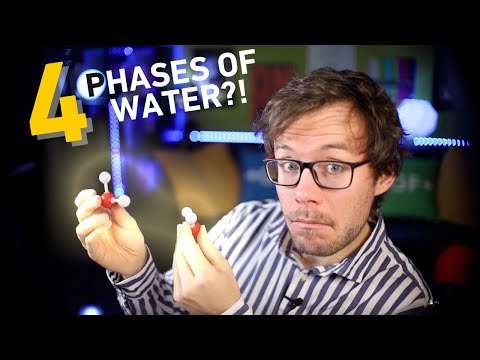
Gerald Pollack's central claim is that water has a fourth phase, beyond the solid, liquid and gas everyone learns in school. He says that next to a water-loving (hydrophilic) surface, the water molecules reorganise into a sheet-like, hexagonal, ordered layer that he calls the exclusion zone, or EZ water, because it pushes out almost everything dissolved in ordinary water. That layer carries a negative electrical charge, the region just beyond it goes positive, and that separation of charge, he argues, makes water behave like a tiny battery. The energy that builds it, his lab found largely by accident when a student left a sample in the dark overnight and watched it shrink, comes from light, especially the infrared light that everything around us is constantly radiating.
Gerald Pollack co-founded a startup, 4th-Phase, Inc., a University of Washington spin-out, to turn the discovery into products, and he had two applications in mind. The first is energy: in the lab his team lit an LED straight off the charge separation in water. The second, and the one he calls the real prize, is filtration without a physical filter, because if the exclusion zone naturally pushes out pollutants like pharmaceuticals and microplastics, you could in principle collect the clean water and leave the contaminants behind, with nothing to clog or replace. Pushed further, he dreams of pulling the salt out of seawater using only sunlight, which in the sun-rich, water-poor regions that need it most would undercut the energy bill of reverse osmosis, today's standard desalination. None of it is solved, and in his own telling the company has been stuck crossing what engineers call the "valley of death," the brutal gap between a laboratory result and a working product, for want of investment.
Here is the part a fair portrait cannot skip. Gerald Pollack is, on paper, a decorated scientist: a Prigogine Medal winner, founding editor-in-chief of the journal WATER, recipient of the University of Washington's highest faculty honour, with papers in respectable journals. And yet most mainstream water and electrochemists do not buy his fourth phase, arguing his observations can be explained by ordinary chemistry and impurities, and one prominent chemist went as far as calling it "the cold fusion of physical chemistry." When I looked into it myself for my Leviathan notes, what I found is a genuine split: there is broad agreement that water does something unusual near surfaces, but Pollack's explanation, that light builds the structure, competes with several rival theories, and the matter is far from settled. So I will not tell you he is right, because I am a water engineer, not a physical chemist, and I cannot adjudicate it. What I can tell you is that he is a serious, credentialed scientist who decided, late in a long career, that he would rather be the outsider chasing a big, awkward question than the insider polishing the consensus.
“The way to move things along is not to perfect candlelighting to keep improving it, but to start something that is a brand new idea.”
Gerald Pollack knows the establishment may never come around, and he says so plainly, that his ideas will likely be rejected by the specialists in each field he wanders into. He is, in the best sense, comfortable being wrong in public if that is the price of asking the question at all.
On (don’t) Waste Water
The two times Gerald Pollack joined the show, a two-part conversation recorded in 2021:
The company
Frequently asked
- Who is Gerald Pollack?
- Gerald Pollack is a professor of bioengineering at the University of Washington, where he has taught since 1968, and the author of "The Fourth Phase of Water." He argues that water forms an ordered fourth phase next to surfaces, and he co-founded the startup 4th-Phase, Inc. to put that discovery to work.
- What is EZ water, or the fourth phase of water?
- EZ water, short for exclusion-zone water, is the fourth phase Gerald Pollack proposes beyond solid, liquid and gas. He describes it as an ordered, negatively charged layer that forms next to water-loving surfaces and pushes out dissolved particles, built and energized by light, particularly the infrared radiating from everything around us.
- Is the fourth phase of water real, and what do scientists think?
- Gerald Pollack's fourth phase is genuinely contested. He is a decorated scientist with peer-reviewed papers, and many agree water behaves unusually near surfaces. But most mainstream water chemists reject his explanation, saying ordinary chemistry and impurities account for it, and one critic called it "the cold fusion of physical chemistry."
- What is the H3O2 formula linked to Gerald Pollack?
- H3O2 is the chemical formula Gerald Pollack proposes for exclusion-zone water, meaning it carries an extra hydrogen and oxygen compared with ordinary H2O. In his model this is what makes the fourth phase ordered and charge-bearing. Mainstream chemists dispute that a stable H3O2 phase can exist in bulk water.
- Where can I listen to or watch Gerald Pollack?
- Gerald Pollack was a guest on the (don’t) Waste Water podcast in 2021, across a two-part conversation about the fourth phase of water. Both episodes are linked above to listen on your podcast app or watch on YouTube, and one is also written up as a full article on dww.show.