David Sedlak
Plato Malozemoff Professor of Civil & Environmental Engineering at UC Berkeley
UC Berkeley professor and author of "Water 4.0" and "Water for All", who maps where our water systems came from and the reinvention the next 30 years demand.
Compiled by Antoine Walter - from insight gathered on and off his (don’t) Waste Water microphone!
David Sedlak is the Plato Malozemoff Professor of civil and environmental engineering at UC Berkeley and the author of two of the most-read books on water, "Water 4.0" (2014) and "Water for All" (2023). He directs the Berkeley Water Center and helps run two big US research programs, ReNUWIt and NAWI, trying to build water’s next reinvention. As of 2026.
David Sedlak did not set out to write the books that made him one of water’s most-read voices. He is a chemist by training, with a PhD in water chemistry from the University of Wisconsin-Madison, and for years his Berkeley lab was busy with something narrower and less glamorous: tracking where pharmaceuticals and steroid hormones end up when we recycle water and send it back to the tap. What surprised him was not the chemistry, it was the public. He kept meeting people who had no idea where their water came from, and then he realised that we, the water professionals, do not really know either. That gap is what started the writing.
David Sedlak’s first book, “Water 4.0”, came out of that realisation, and it told the story of our water systems as four big reinventions, from Roman aqueducts to drinking-water treatment to sewage treatment to the reuse era we are entering now. The point he kept circling is that water professionals behave like the blind men and the elephant: each of us understands our own piece, the pipes or the membranes or the financing or the policy, and almost nobody holds the whole animal in their head at once. The fix he argues for is “one water”, the unfashionable idea that you cannot solve drinking water, wastewater, stormwater and reuse as separate problems, because physically they are the same water moving through the same city.
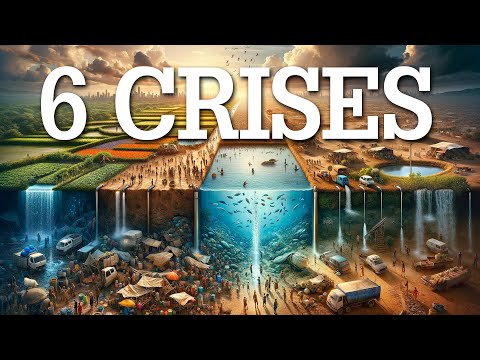
David Sedlak’s second book, “Water for All”, widened the lens because he felt the first one had quietly been a book about water for rich people who live in cities. This one takes on the harder global question, the six water crises he organises the book around: water for the wealthy, for the many, for the unconnected, for good health, for food, and for ecosystems. And his honesty about it is the tell of how he thinks, because he admits none of us are really qualified to understand the full depth of the global water challenge, himself included, which is exactly why he wrote it as, in his words, his own homework.
David Sedlak is not just an author, and this is the part people miss. Both books were written alongside two of the biggest research bets in American water. While drafting “Water 4.0” he was launching ReNUWIt, the National Science Foundation centre for Reinventing the Nation’s Urban Water Infrastructure, and “Water for All” coincided with the launch of NAWI, the Department of Energy’s National Alliance for Water Innovation, the desalination hub he chairs the research council for. So when he talks about how water technology actually matures, he is talking from inside the machine, and his core warning is sobering for anyone expecting fast wins: in water, the road from a clever invention to a technology you take for granted is measured in decades, not years. You can hear the whole argument in his conversation on the six water crises.
David Sedlak’s real obsession, though, is not any single technology. He thinks the water system we have today will undergo dramatic change in the next three decades whether we plan for it or not, and that our worst habit is patching a problem only once the public decides it is a crisis. So what he is genuinely trying to build is not a gadget but a generation of people who can think holistically, and he describes the payoff with a metaphor only a chemist would reach for:
“I’d like to think about it the way a chemical engineer thinks about a catalyst. A catalyst doesn’t get depleted by the reaction it undergoes. It keeps working and working and working. The human capacity that we create lives on beyond any small research program we do, and hopefully it diffuses out and influences others.”
He is, in short, the rare water scientist who would rather change how the field thinks than sell it a single answer, which is most of why two of his books sit on so many water professionals’ shelves.
On (don’t) Waste Water
The conversation David Sedlak brought to the show, on his book “Water for All” and the six water crises ahead:
The company
Frequently asked
- Who is David Sedlak?
- David Sedlak is the Plato Malozemoff Professor of civil and environmental engineering at UC Berkeley and the author of the water books “Water 4.0” (2014) and “Water for All” (2023). He directs the Berkeley Water Center and was elected to the National Academy of Engineering in 2016.
- What are David Sedlak’s books “Water 4.0” and “Water for All” about?
- “Water 4.0” (Yale, 2014) tells the history of urban water as four reinventions and argues for “one water” thinking. “Water for All” (Yale, 2023) widens that to the six global water crises: water for the wealthy, the many, the unconnected, health, food, and ecosystems.
- What does David Sedlak research at UC Berkeley?
- David Sedlak researches the fate of chemical contaminants in water, focusing on water reuse, decentralized supplies, urban runoff, and contaminated groundwater. He helps lead two major US programs, the NSF center ReNUWIt and the Department of Energy desalination hub NAWI, that turn that research into systems.
- What are the six water crises David Sedlak writes about?
- David Sedlak organizes “Water for All” around six water crises: water for the wealthy, water for the many, water for the unconnected, water for good health, water for food, and water for ecosystems. His argument is that we cannot solve them in isolation, because it is one connected water system.
- Is David Sedlak the same as the book “Water 4.0”?
- No. David Sedlak is the author; “Water 4.0” and “Water for All” are his books, both published by Yale University Press. He is a professor at UC Berkeley, not a company, and he is also a former editor-in-chief of the journal Environmental Science & Technology.
- Where can I listen to David Sedlak on (don’t) Waste Water?
- David Sedlak joined the (don’t) Waste Water podcast to discuss “Water for All” and the six water crises ahead, in an episode titled “How to Overcome the 6 Water Crises Ahead. The Rise of Small Scale Solutions?” You can read, listen to, or watch that conversation from the links above.