Riikka Timonen
VP, Commercial New Ventures & Services (EMEA & APAC) at Kemira
Kemira executive leading the Finnish chemical maker's push into renewable, bio-based water-treatment chemistry, building a market that, in her own words, does not exist yet.
Compiled by Antoine Walter - from insight gathered on and off his (don't) Waste Water microphone!
Riikka Timonen leads Kemira's renewable solutions push, the part of the 105-year-old Finnish chemicals company that is trying to replace fossil-based water-treatment chemistry with bio-based versions before customers or regulators ask for it. As she puts it, "we have had to make the market." Kemira aims for over €500 million in renewable revenue by 2030 (as of 2026).
Riikka Timonen runs one of the three pillars Kemira bets its future on, and it is the strangest one to sell, because the demand is not there yet. Kemira is a Finnish chemicals company founded in 1920, and most people in water know it as the quiet giant behind the coagulants and polymers that treat a large slice of the world's drinking water and wastewater. Timonen's job, as the executive over Kemira's renewable solutions portfolio (today as VP of Commercial, New Ventures and Services for Europe and Asia-Pacific), is to take that fossil-based chemistry and make a bio-based version of it, and her guiding word, the one she keeps coming back to, is "renewable."
Riikka Timonen is honest about the catch, which is what makes the story interesting: nobody is asking for this. "There is no market for renewable water treatment," she said on the show. "The customers are not asking for bio based polymers. We have had to make the market. There is no regulation pushing for the municipalities to select a less fossil based chemistry." That is the opposite of how most water technology gets sold, where a new rule (think PFAS limits) creates instant demand and the suppliers race to fill it. Timonen is selling decarbonisation of the chemistry itself, the part of the value chain almost nobody in water talks about, and she has to convince a utility to pay for a benefit that no tender currently rewards.
Riikka Timonen splits the work into two technical routes, and the distinction matters for whether you are really cleaning anything up. The first is what the industry calls a biomass-balanced approach, where the final molecule is chemically identical to the fossil-based one but some of the raw materials feeding the plant are swapped for bio-based feedstock, so the carbon footprint drops without changing the product. The second is genuinely bio-based chemistry, built up from things like starch or a polysaccharide platform, and that is the harder, more valuable version, because it changes what happens at the end. In sludge dewatering, for example, a one-for-one swap still leaves polyacrylamides (a synthetic polymer) in the sludge, whereas a fully bio-based product changes the end-of-life of that sludge entirely.
Riikka Timonen frames all of this as a purpose call rather than a pure financial one, and Kemira backed that framing with a hard decision. In early 2024 the company sold off its entire oil-and-gas chemicals business to Sterling Specialty Chemicals for around 280 million dollars, and it did so while that business was actually in an upcycle and making good money. "I think that the purpose won," she said. "Oil and gas for Kemira has always been a very cyclical business, but in this particular time, they were in the upcycle, and it was clear that from a strategic perspective, that was a step we had to take, because there was not a good fit with our sustainability story." Walking away from a profitable unit to stay consistent with a renewable strategy is the kind of move that tells you whether a company means it.
Riikka Timonen has been inside Kemira for most of her career, since 2001, with a stint running a business accelerator at the Finnish machinery company Valmet, so she is an insider arguing for change rather than a startup founder attacking from outside, which is rarer and harder. Her renewable portfolio was already worth about 230 million euros in revenue when we spoke, and Kemira has since set a public target of more than 500 million euros from renewable solutions by 2030, up from roughly 100 million in 2019. And her sharpest point is one the whole water sector tends to skip:
“You should talk more about replacing fossils in the value chain. This is a big trend in other industrial areas, replacing plastics, replacing synthetics, but I don't see this discussion happening in the water world. We talk about removing PFAS from drinking water, we talk about carbon footprint, but we don't really talk about taking the fossils away, because that's already possible.”
Riikka Timonen, in other words, is trying to move an industry's attention from cleaning the water to decarbonising the chemicals we clean it with, and she is doing it from inside one of the incumbents that would have to change the most.
On (don’t) Waste Water
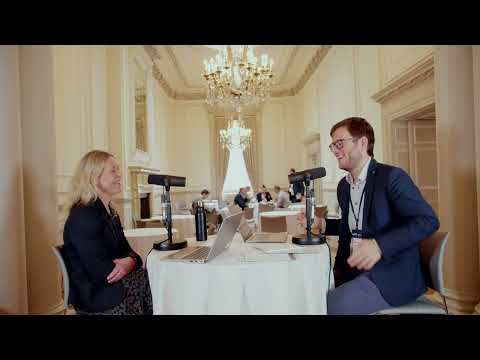
Riikka Timonen has been a guest on the show once, breaking down why she has to build a market that does not yet exist:
The company
Frequently asked
- Who is Riikka Timonen?
- Riikka Timonen is a Kemira executive who leads the Finnish chemicals company's renewable solutions portfolio, the push to replace fossil-based water-treatment chemistry with bio-based versions. An environmental engineer by training, she has worked at Kemira since 2001 and is now its VP of Commercial, New Ventures and Services for Europe and Asia-Pacific.
- What does Kemira do, and what is its renewable solutions strategy?
- Kemira is a Finnish chemicals company founded in 1920 that supplies coagulants, polymers and specialty chemicals used to treat drinking water, wastewater, and pulp and paper. Its renewable solutions strategy, which Riikka Timonen leads, aims to convert that fossil-based chemistry to bio-based versions, targeting over €500 million in renewable revenue by 2030.
- What is bio-based water-treatment chemistry?
- Bio-based water-treatment chemistry replaces the fossil feedstocks behind treatment chemicals with renewable ones. Riikka Timonen describes two routes: a biomass-balanced approach, where the molecule is identical but raw materials are swapped to cut carbon, and a fully bio-based route built from starch or polysaccharides, which also changes the end-of-life of treated sludge.
- Why did Kemira sell its oil and gas business?
- Kemira sold its oil-and-gas chemicals business to Sterling Specialty Chemicals in early 2024 for about $280 million, while that unit was still profitable. Riikka Timonen calls it a case where "the purpose won": the cyclical oil-and-gas business no longer fit Kemira's sustainability story, so the company exited despite the upcycle.
- Is Riikka Timonen the same as Kemira?
- Riikka Timonen is an executive at Kemira, not the company itself. Kemira is the 105-year-old Finnish chemicals maker; Timonen leads its renewable solutions portfolio and, since January 2025, serves as VP of Commercial, New Ventures and Services for EMEA and APAC. She also sits on the board of Finland's Neova Group.
- Where can I listen to Riikka Timonen?
- Riikka Timonen was a guest on the (don't) Waste Water podcast in 2024, on the episode "How Kemira Defied Market Odds to Lead in Bio-Based Tech," where she explains why she has to build a market for renewable water chemistry. You can listen, watch or read it from the links above.