J. Carl Ganter
Co-Founder & Managing Director at Circle of Blue
Co-founder and managing director of Circle of Blue, the nonprofit newsroom that fuses front-line water journalism with data and convening to move the global water story off the back pages.
Compiled by Antoine Walter - from insight gathered on and off his (don't) Waste Water microphone!
J. Carl Ganter is the co-founder and managing director of Circle of Blue, the nonprofit newsroom he started in 2003 to fuse front-line water journalism with data. A photojournalist who has shot for Time and National Geographic, he argues that water's real problem is that nobody tells the story well enough for people to act. As of 2026 he is based in Traverse City, Michigan.
J. Carl Ganter came to water from journalism, not engineering. He is an award-winning broadcaster and photojournalist whose work has run in Time, National Geographic and Rolling Stone, and he started out as a television investigative reporter, where, as he puts it, the trick of the trade was that you "scare them on Sunday and save them on Monday." He trained at Northwestern University's Medill School of Journalism, and somewhere along the way he decided the single biggest story of our lifetime was the one almost nobody was covering properly: fresh water, and how it knots together food, energy, climate and who gets to thrive.
J. Carl Ganter co-founded Circle of Blue in 2003 to fix that gap, and it is a deliberately odd newsroom. He describes it as a hybrid: great front-line reporting ("we get out, we get dirty") fused with data, science and research, and then convening, bringing people who are not on the same side of the table to the same table anyway. Circle of Blue embeds reporters for weeks in places like India and China to tease the story out, because the water story, in his words, is not only a big drama but very, very complicated. The newsroom is a nonprofit, based in Traverse City, Michigan, and it is the through-line of his whole career, which is exactly why I wanted him on the podcast to argue about how the rest of us cover water.
J. Carl Ganter's core conviction is that what water lacks is not facts but narrative, and his fix is to put a real person back behind every bullet point. He likes to point out that two photographs, single human moments, helped turn public opinion on the Vietnam War, and he argues the water sector keeps presenting depletion and pollution as statistics when there is always someone behind the number. His own reporting proves the point: a Circle of Blue series in Nebraska, with reporter Brett Walton, traced childhood cancer clusters to atrazine and nitrate contamination drawn up from the Ogallala Aquifer for irrigation.
J. Carl Ganter still talks about photographing that Nebraska high-school football team at practice, the players wearing little yellow stickers on their helmets for friends who had died of cancer linked to contaminated water, and then sitting in the kitchens of families who had lost children. He framed it as a health story rather than a climate one, and it worked in a way a chart never would: a former US Secretary of Agriculture and a Republican state senator from big-agriculture country both called, and the senator pushed for budget to fund buffer zones and farmer education. That is the whole Ganter thesis in one example, capture the heart first, then land the data point, so the city-council member or the prime minister actually sees themselves in the picture. He made that case in full when he joined me on the (don't) Waste Water podcast.
“He came back up to me in the airport and said, well, you know the next wars, they won't be fought over oil, they'll be fought over water. And I leaned in and I said, well, you know, they already are.”
He is, in short, a reporter who treats water as the richest story in civilisation's history, full of heroes, victims, villains and the occasional new technology, and who has spent two decades trying to make the rest of us see it that way too.
On (don’t) Waste Water
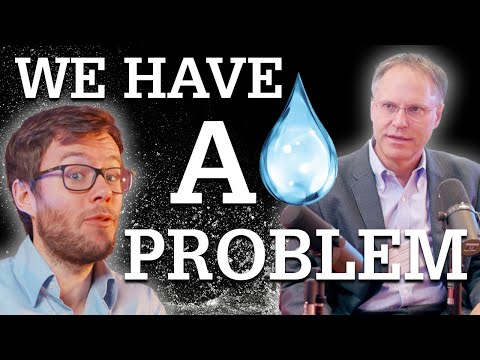
J. Carl Ganter has been a guest on (don't) Waste Water once, on the case for telling the water story better:
The company
Frequently asked
- Who is J. Carl Ganter?
- J. Carl Ganter is the co-founder and managing director of Circle of Blue, a nonprofit water-journalism newsroom he started in 2003. An award-winning photojournalist published in Time and National Geographic, he argues that water's biggest challenge is narrative, telling the story so people act, not technology.
- What is Circle of Blue, and what does it do?
- Circle of Blue is a nonprofit newsroom co-founded by J. Carl Ganter in 2003. It fuses front-line water reporting with data, science and convening, embedding journalists worldwide to cover fresh water and its links to food, energy and climate, then bringing decision-makers together around what it finds. It is based in Traverse City, Michigan.
- How did J. Carl Ganter get into water?
- J. Carl Ganter came to water through journalism, not engineering. A Northwestern-trained television investigative reporter and photojournalist for Time and National Geographic, he concluded fresh water was the biggest under-covered story of our time, and co-founded Circle of Blue in 2003 to report it properly.
- What is J. Carl Ganter known for?
- J. Carl Ganter is known for arguing that the water sector loses because it presents crises as statistics instead of human stories. He champions putting a real person behind every bullet point, a method his Circle of Blue reporting on Nebraska childhood-cancer clusters showed could actually move policy.
- Is J. Carl Ganter the same as Circle of Blue?
- No. J. Carl Ganter is the person, the co-founder and managing director; Circle of Blue is the nonprofit newsroom he started in 2003 and still leads. He is also a World Economic Forum contributor and an Explorers Club Fellow, recognised for his freshwater journalism.
- Where can I listen to J. Carl Ganter?
- J. Carl Ganter was a guest on the (don't) Waste Water podcast in 2023, in the episode "Is Big Media Failing Us, or Are We Failing the Water Folks?" You can read, listen to or watch that conversation through the links on this page, where he makes the case for telling the water story better.