George McGraw
Founder & Senior Advisor at DigDeep
Founder of DigDeep, the nonprofit that exposed and is closing the US Water Gap: the 2.2 million Americans still living without a tap or toilet at home.
Compiled by Antoine Walter - from insight gathered on and off his (don't) Waste Water microphone!
George McGraw is the founder of DigDeep, the human-rights nonprofit that exposed America's hidden water crisis: the roughly 2.2 million people still living without a tap or toilet at home, a gap DigDeep found costs the US economy about $8.6 billion a year. He led DigDeep as CEO until 2026 and is now its senior advisor (as of 2026).
George McGraw did not come to water the way most water-tech founders do. His background is in international human rights law, with a master's from the UN-mandated University for Peace, and his graduate thesis argued for the "minimum core" of the human right to water, the legal floor every person is owed. So when he started DigDeep out of his bedroom a little over a decade ago, he did what almost everyone in that world did and pointed it abroad, building water-access systems in South Sudan and Cameroon.
George McGraw then got the phone call that redirected his whole career, the one he told in full on (don't) Waste Water. A donor named Karen in California offered him fifty dollars on one condition, that he spend it not overseas but in the United States, on the Navajo Nation. He pushed back, telling her nobody needed that money here, and she set him straight. She had been building homes on the largest Native American reservation in the country and her Navajo colleagues had told her they would not bother adding bathrooms, because there was no running water and none was coming. McGraw drove out to see it, and the Navajo Water Project, DigDeep's first US program, was born.
George McGraw built DigDeep into the only organization focused entirely on what he calls the Water Gap: the roughly 2.2 million Americans who have no tap or toilet at home, spread across all 50 states and often a ten-minute drive from people who have no idea the problem exists. The pattern underneath it is uncomfortable, and McGraw is blunt about it: race is the single strongest predictor of whether your family has running water in America, with Native households about nineteen times more likely than white households to go without. DigDeep's field teams now connect homes to water, on-grid or off, through the Navajo, Appalachia, and Colonias Water Projects, while a research and policy arm keeps measuring the gap so governments can no longer say it isn't there.
George McGraw's other big move was to make the dry economic case that water people had been missing. In 2019 he co-authored "Closing the Water Access Gap in the United States," the first national study to count the 2.2 million, with Radhika Fox, who went on to run the water office at the US Environmental Protection Agency. Then in 2022 DigDeep published "Draining," which put hard numbers on the cost of doing nothing. The figure that lands hardest is the return: for every single dollar invested in getting taps and toilets to these families, the study found the US economy gets back about five dollars, because closing the gap means fewer waterborne illnesses, fewer lost school and work hours, and lower healthcare bills. Leave it open, and the same math runs the other way, draining roughly $8.6 billion a year out of the economy.
George McGraw frames the whole thing as a "wrong pocket problem," the economist's name for what happens when the people who would have to pay to fix something are not the ones who reap the benefit, which is most of why this gap has stayed open for decades. He is, even so, stubbornly optimistic that it can be closed within a generation, and a lot of his recent energy has gone into the unglamorous plumbing of that, including a certificate program with the plumbers' union and the plumbing-standards body IAPMO at Navajo Technical University, training the first cohort of Navajo plumbers so the money and the skills stay in the community. In May 2026, after roughly fifteen years, McGraw handed off the CEO role and stayed on as DigDeep's founder and senior advisor.
“I started DigDeep in my bedroom a little over a decade ago, and our focus was on South Sudan and Cameroon. And then one day I got a call from a donor, a woman named Karen in California, who said, "I want to donate $50, but I want you to spend it in the US on the Navajo Nation."”
He is, in short, the rare advocate who can hold the moral argument and the spreadsheet in the same breath, which is most of why the US Water Gap went from a problem almost nobody had heard of to one a federal water office, a plumbers' union, and a growing coalition are now actively trying to close.
On (don’t) Waste Water
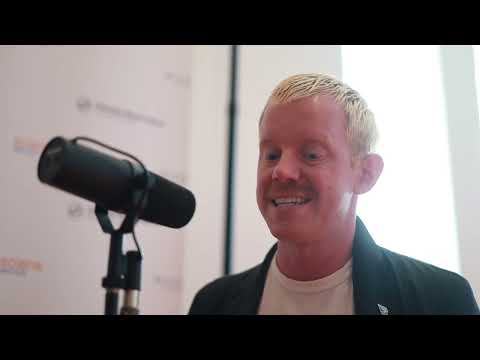
George McGraw was a guest on (don't) Waste Water once:
The company
Frequently asked
- Who is George McGraw?
- George McGraw is the founder of DigDeep, the human-rights nonprofit working to close the US Water Gap. A human-rights lawyer by training, he built DigDeep into the only organization focused solely on the roughly 2.2 million Americans without a tap or toilet at home, and led it as CEO from its founding until 2026.
- What is DigDeep, and what does it do?
- DigDeep is a US nonprofit dedicated to closing the Water Gap: the roughly 2.2 million Americans living without running water or a working toilet at home. Its field teams connect homes to water through the Navajo, Appalachia, and Colonias Water Projects, and its research arm measures the crisis and makes the policy case to fix it.
- How did George McGraw start DigDeep?
- George McGraw, a human-rights lawyer, started DigDeep over a decade ago to build water systems in South Sudan and Cameroon. A donor's fifty-dollar gift, earmarked for the Navajo Nation, redirected him to America's own water crisis, and the Navajo Water Project became DigDeep's first US program.
- How many Americans live without running water at home?
- Roughly 2.2 million people in the United States live without a running tap or a working toilet at home, the figure DigDeep first quantified in its 2019 national report. They live in all 50 states, and race is the strongest predictor of who is affected, with Native households about nineteen times more likely than white households to go without.
- What does closing the US water gap cost, and what does it return?
- DigDeep's 2022 "Draining" study found America's water access gap drains roughly $8.6 billion a year from the economy in health and lost-productivity costs. The flip side is the return: for every dollar invested in getting taps and toilets to these families, the study estimates the economy gets back about five dollars.
- Is George McGraw still the CEO of DigDeep?
- George McGraw stepped down as CEO of DigDeep in May 2026, after roughly fifteen years leading the organization, and now serves as its founder and senior advisor. DigDeep's board has launched a search for the next CEO, while McGraw stays involved in the mission he started.