Roger Berry
Founder & CEO at Sudoc
Founder and CEO of Sudoc, the company commercializing Carnegie Mellon's TAML catalysts to clean water and replace harsh chemicals using a fraction of the usual energy.
Compiled by Antoine Walter - from insight gathered on and off his (don't) Waste Water microphone!
Roger Berry is the founder and CEO of Sudoc, a Massachusetts company commercializing TAML catalysts, a class of iron-based molecules invented at Carnegie Mellon that supercharge hydrogen peroxide to break down pharmaceuticals, pesticides and dyes in water. Berry, a two-decade clean-energy investor rather than a chemist, took the helm in 2020 and has raised $16 million to scale it (as of 2026).
Roger Berry is the rare water-tech CEO who did not invent the technology he sells, and he is the first to say so. Berry spent two decades in private equity and clean energy, from Climate Change Capital in London to running turnarounds for the clean-energy fund TEM Capital, before a chemistry company called Sudoc came to his doorstep in 2020. Sudoc had grown out of 40 years of work by Dr. Terry Collins at Carnegie Mellon University, who invented a family of catalysts called TAMLs (tetra-amido macrocyclic ligands, which is a mouthful for tiny iron-based molecules that mimic the enzymes your liver uses to break down toxins). Berry's job was never to do the chemistry. It was to turn a brilliant academic molecule into a business.
Roger Berry frames Sudoc's catalyst as a way to do oxidation, the chemistry of breaking pollutants apart, far more cheaply than the alternatives. The molecule activates ordinary hydrogen peroxide and, in Berry's words, when an independent study at UMass Amherst added it to an electrochemical system treating waste pharmaceuticals, it cut the energy demand by 90 percent and made the system roughly 40 times more efficient. That efficiency is the whole pitch, because the usual knock on advanced water treatment is that it costs too much energy to run at scale. One important honesty point that Berry volunteered on the show: the catalyst does not directly destroy PFAS, the famously stubborn forever chemicals, since their carbon-fluorine bonds are a different beast, and he is careful to say it is not a magic bullet.
Roger Berry's real signature is the business model, and it comes from a lesson every water investor learns the hard way. As one investor told him, the first question to ask any water technology is whether it has another way of making money, because the water market is slow to adopt, slow to pilot and expensive to enter. So Sudoc sells its chemistry as a simple drop-in additive (no new hardware, you dose it into the pump you already have) across two lines at once: cleaning products that generate revenue and customers today, and water treatment, branded NEAT, on a five-to-ten-year ladder toward utility scale. The cleaning side already has more than 100 customers, which is what keeps the company out of the pilot-purgatory that traps so many water startups.
Roger Berry's reason for being in this at all is more personal than the spreadsheet suggests. In January 2020, just as COVID was becoming a story, he survived a near-fatal pulmonary embolism, a blood clot in the lungs that carries a roughly 30 percent mortality rate, and two months later the Sudoc conversation landed. He spent the whole weekend dissecting what the business could become from every angle, the regulatory one, the commercial one, the scientific one. It is the instinct of someone who has spent his career sizing up other people's companies, finally pointed at one he could run himself, and his stated ambition is not a quick exit but to still be running Sudoc years from now.
“One investor once told me that the first question she asks any water technology is, do you have another way of making money? Because the market is slow to change, slow to adopt, slow to pilot, expensive to get in.”
That second revenue line is most of why Sudoc, alone among the deep-tech water companies I have hosted, can afford to take the long view on the chemistry.
On (don’t) Waste Water
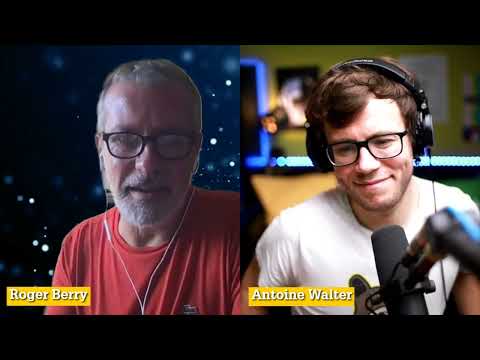
Roger Berry was a guest on (don't) Waste Water once, walking through the chemistry and the business behind Sudoc:
The company
Frequently asked
- Who is Roger Berry of Sudoc?
- Roger Berry is the founder and CEO of Sudoc, a Massachusetts company that commercializes TAML catalysts to clean water and replace harsh chemicals. A Harvard graduate and two-decade clean-energy and private-equity investor, Berry took the helm in 2020 and has raised $16 million to scale the technology.
- Is the Roger Berry at Sudoc the same as the SuDoc library system?
- No. Roger Berry the water-tech CEO leads Sudoc, the catalyst company spun from Carnegie Mellon chemistry. That is unrelated to "SuDoc" the US government-document classification or the French university catalogue, and unrelated to other people named Roger Berry, such as surgeons or the former British MP.
- What is Sudoc and what does its TAML technology do?
- Sudoc commercializes TAML catalysts, iron-based molecules invented by Dr. Terry Collins at Carnegie Mellon. They activate ordinary hydrogen peroxide to oxidize pharmaceuticals, pesticides, dyes and other micropollutants in water at very low doses, cutting the energy and chemicals a treatment system needs compared with chlorine or ozone.
- Does Sudoc's chemistry destroy PFAS forever chemicals?
- Not directly. Roger Berry is careful to say Sudoc's TAML catalysts are not effective on the carbon-fluorine bonds that make PFAS so stubborn, calling it no magic bullet. The company's strength is degrading pharmaceuticals, pesticides, dyes and other micropollutants, where independent testing showed up to 90 percent energy savings.
- How much funding has Sudoc raised?
- Sudoc has raised $16 million to date: a $10 million seed in 2021 led by the Hunter Lewis Family Trust, and a 2024 round led by Momentum Capital with PureTerra Ventures, an EU-backed fund. The money scales both its cleaning-product line and its NEAT water-treatment business.
- Where can I listen to Roger Berry?
- Roger Berry appeared on the (don't) Waste Water podcast in the episode "How Sudoc Manufactures a 100x Smaller and 1000x More Powerful Catalyst," where he explains the TAML chemistry and Sudoc's dual cleaning-and-water-treatment model. The episode is linked above to read, listen or watch.