Amielle Lake
Co-Founder & Chief Commercial Officer at CarboNet
Co-founder and Chief Commercial Officer of CarboNet, the Vancouver company whose NanoNet flocculants cut the petrochemical chemistry used to clean industrial water by 80%.
Compiled by Antoine Walter - from insight gathered on and off his (don’t) Waste Water microphone! As of June 2026.
Amielle Lake is the co-founder and Chief Commercial Officer of CarboNet, the Vancouver water-tech company behind NanoNet flocculants, carbohydrate nano-polymers that let industrial customers treat oily, salty water with 80% less polyacrylamide, the petrochemical the industry normally leans on. A marketing-software founder before water, she co-founded CarboNet in 2018 and runs its commercial side. As of 2026.
Amielle Lake did not come to water through chemistry, and she is the first to say so. She founded a marketing-software company in Vancouver called Tagga, ran its sales and was CEO for the first five years, and sold it to Campaign Monitor. So when she describes oil-and-gas water as "a land far, far away from chemistry," she means it literally, and the thing she noticed on arriving is the irony the whole business now runs on: a lot of the water we use gets cleaned with chemistry made from oil. CarboNet exists to change that, and Amielle Lake is the one who has to sell the change.
CarboNet was co-founded in 2018 around an idea that came from a UBC PhD student, Michael Carlson, who started in biochemistry and drug delivery and brought that obsession with precision to water. The product is called a NanoNet, a family of carbohydrate-based nano-polymers, which are molecules engineered at a scale far too small to see, designed to grab very specific things in water. The first place CarboNet pointed them was flocculation, the step where you bind tiny suspended particles together so they clump and drop out, which the industry does today with a petrochemical called polyacrylamide, or PAM. On the show, Amielle Lake calls PAM "the new Karen," and the pitch is that a NanoNet works alongside it like a guide dog, so you need 80% less of it, with a path she says leads to zero.
Amielle Lake makes the case for CarboNet on economics first, because she has learned that nobody in heavy industry pays a premium to be greener. "No one wants to pay a premium to save the planet," she says, "as sad as that sounds," so CarboNet engineered a product that is cheaper to run and lighter on the environment at the same time, rather than asking a customer to choose. That matters most for the people who produce the dirtiest water of all, oil-and-gas operators recycling the salty produced water that comes up with a well, who would rather not have their water treatment depend on petrochemicals when their own customers are asking about emissions.
Her real edge, though, is commercial, and the episode title gives it away. To convince skeptical buyers that the chemistry held up outside a lab, CarboNet built full pilot-scale demonstration plants on site, pumped real water through them, flew the customer's team down, and sent them home in t-shirts that read "Believer." Amielle Lake swears she later spotted people wearing them in the airport. It is a marketer's instinct applied to a famously unsexy industry, and it is the same instinct she points other founders to: solve a problem that is bleeding, not one that needs an aspirin, because your customer is not out there searching for you.
Beyond CarboNet, Amielle Lake co-founded Women's Equity Lab, an all-female angel investor group, after a moment she still describes vividly: at the Tagga sale, she looked down the list of people on the closing documents and counted exactly two women, herself and one other. She travels a male industry, and jokes that on some trips the only other woman she meets is the one selling her coffee. The thread that ties the software founder, the chemistry seller and the angel investor together is the same one she keeps returning to, which is that good businesses listen, and the ones that win in water are the ones stubborn enough to keep proving it.
“We flew down our team, gave them ice cream. We made them t-shirts that said Believer at the end. And I'm not joking, we would see people at the airport afterwards in their Believer t-shirts.”
She is, in the end, a salesperson who landed on a real breakthrough, which in deep-tech water is rarer and more useful than it sounds: the chemistry is Michael's, but turning it into invoices in the Permian was hers.
On (don’t) Waste Water
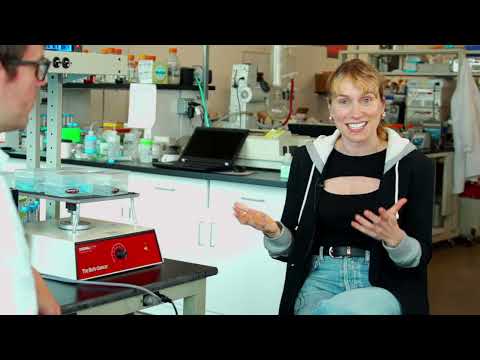
Amielle Lake came on (don’t) Waste Water once, to explain how CarboNet sells a chemistry breakthrough to an industry that does not want to change:
The company
Frequently asked
- Who is Amielle Lake?
- Amielle Lake is the co-founder and Chief Commercial Officer of CarboNet, a Vancouver water-treatment company she helped start in 2018. A marketing-software founder before water, she sold her first company, Tagga, to Campaign Monitor, and now runs the commercial side of CarboNet, whose NanoNet chemistry cuts the petrochemicals used to clean industrial water.
- What is CarboNet, and what does it do?
- CarboNet is a Vancouver advanced-materials company whose NanoNet platform builds carbohydrate-based nano-polymers that target specific particles in water. Its first products are flocculants that let industrial customers, mostly oil-and-gas operators recycling produced water, treat that water with about 80% less polyacrylamide, the petrochemical the industry normally uses, cutting cost and emissions.
- How did Amielle Lake get into the water industry?
- Amielle Lake came from marketing software, not chemistry. She founded Tagga, sold it to Campaign Monitor, then co-founded CarboNet in 2018 with UBC scientist Michael Carlson and two others. Her job is commercial: she ran sales at her previous company and brought that go-to-market instinct to selling water chemistry to skeptical heavy-industry buyers.
- What are CarboNet's NanoNets?
- NanoNets are carbohydrate-based nano-polymers, molecules engineered at a microscopic scale to grab specific things in water. In flocculation they work alongside polyacrylamide like a guide dog, so far less of that petrochemical is needed, around 80% less, with a path to zero. The same platform can target metals like lithium or separate fly ash.
- How much funding has CarboNet raised?
- CarboNet raised a $4.1 million seed round in March 2019, led by Pangaea Ventures, to commercialize its chemistry across industrial and produced-water treatment. It followed with a Series A in 2024, led by NGIF Capital, to expand the platform. The seed figure is the audited total recorded in the Leviathan database.
- Is Amielle Lake the same as CarboNet?
- No. Amielle Lake is one of four co-founders of CarboNet and its Chief Commercial Officer; she is the commercial leader, not the company itself. The science behind CarboNet's NanoNet platform came from co-founder Michael Carlson, a UBC PhD chemist. Amielle Lake also co-founded Women's Equity Lab, an all-female angel investor group, separate from CarboNet.