💧 Akvo produces Water from Air, aka Limitless Water from Unlimited Air
For a real-world case study of how water-from-air can go wrong, see how SOURCE, the best-funded atmospheric water company ever, lost everything in 12 months.


What we covered:
🍏 How water may be a bit less scarce than we all thought, considering there are 140 trillion liters of water up in the air at any point in time
🍏 How the decentralized nature of Water from Air is an enabler for the solution to grow
🍏 How AKVO refined and optimized a pretty simple technology
🍏 Key Hints on the best ingredients to get your water innovations adopted by the early and late majorities
🍏 How Water from Air is by no means a silver bullet – it only has the potential to solve the water challenges of 3 billion people
🍏 How competition in your markets and applications is a good sign that you’re on the right track
🍏 How paying for water is still not a given, and how challenging it is to explain that you’re charging for the technology, not the resource.
🍏 The perks of being a bootstrapped business
🍏 How AKVO tripled its size in the past three years and how Navkaran expects his company to triple again by the end of this year
🍏 How the company ambitions to turn Water from Air into Atmospheric Water Generation as a Service
🍏 International expansion, prepaid water distribution, fighting boredom and much more
🔥 … and of course, we concluded with the 𝙧𝙖𝙥𝙞𝙙 𝙛𝙞𝙧𝙚 𝙦𝙪𝙚𝙨𝙩𝙞𝙤𝙣𝙨 🔥
Teaser:
Resources:
➡️ Send your warm regards to Navkaran on LinkedIn
➡️ Visit Akvo’s website
is on Linkedin ➡️
Infographic: Water from Air
Table of contents
- What we covered:
- Teaser:
- Resources:
- Infographic: Water from Air
- Full Transcript:
- Water from Air: The sources of Atmospheric Water Generation
- Producing Water from Air: how did it start for Akvo?
- Competition is a good sign for your business idea!
- Capturing water from air: a new water source
- The optimal conditions of Atmospheric Water Generation
- Inspiration from the Energy Sector and Competitor in Atmospheric Water Generation
- The costs of Water from Air
- Radical Transparency as a sign of credibility
- The hidden cost of Water
- The “moral challenges” of the Water Sector
- Water from Air as a B2C solution
- Path to Growth for Akvo as an Atmospheric Water Generation Company
- Rapid fire questions.
- Other Episodes:
Full Transcript:
These are computer generated, so expect some typos 🙂
Antoine Walter:
Hi Navkaran, welcome to the show.
Navkaran Singh Bagga:
Hi Antoine, Thank you so much for having me!
Antoine Walter:
I’m very interested in the topic we have today. It’s something I had on my bucket list for a while. So I’m really, really looking forward to that discussion. We will be having together, but traditions first, I need to ask you to send me a little postcard from your office where you are today, exceptionally for our discussion today. So you’re in Kolkata, right? So can you tell me something about Kolkata
Navkaran Singh Bagga:
Originally my family ancestry is from Punjab, which is in the north of India. My great-grandfather moved here to bingo before partition to Kolkata is a cultural hub of what I would like to say because you know, it’s seen a lot being a port city, the British came here first. This used to be the British capital of the colony. And Kolkata has institutions which are very, very old. And it has a lot of influence at the, you know, because of the colonial aspects, there’s a town there’s something you would relate to Chandernagor, which are not too far from Kolkata, which used to be a French colony, right? So the French influence is there and the British influence is. And then there’s a whole cultural influence. So Kolkata is a melting pot of different kinds of things.
Antoine Walter:
That’s the beauty of British and former French empire is that wherever you go in the world, you can always find kind of an influence. I don’t know if it’s a beauty or a drawback by the way, but I’m French. So I have to be arrogant a bit. So I’m going to say it’s a beauty.
Navkaran Singh Bagga:
I, I think you know, the past is the past, to be honest. And yeah, but there’s a lot you can attribute in the present to the past. So anything that you want to go on does not necessarily have to have a negative influence.
A second generation entrepreneur with a Water Focus
Antoine Walter:
You mentioned the influence from the past. And actually that’s something that struck me in your, in your Ted talk is that you are a second generation entrepreneur and you’ve started your Ted talk saying that, that you’re you you’re drawing somehow on the former generation. How important was that to you?
Navkaran Singh Bagga:
I am a second-generation entrepreneur, meaning I currently work in a business environment, which my father started. And my job is the second boat. Second generation that is to kind of take it forward and diversify. And I’ve been working now for 14 years and that’s pretty much what I’ve been doing. So we started with our core family business of a merchant export house. You should do a lot of international trade. And I did my undergrad in the UK. Then I came back and my father really wanted to always have a hotel. So you open up mid-segment, hotel in Kolkata, and it started with that. And then I got bored of that in about two years. And then I started looking at the things and I started to kind of look at things that I can diversify. Then I got into acquiring a steel unit.
Navkaran Singh Bagga:
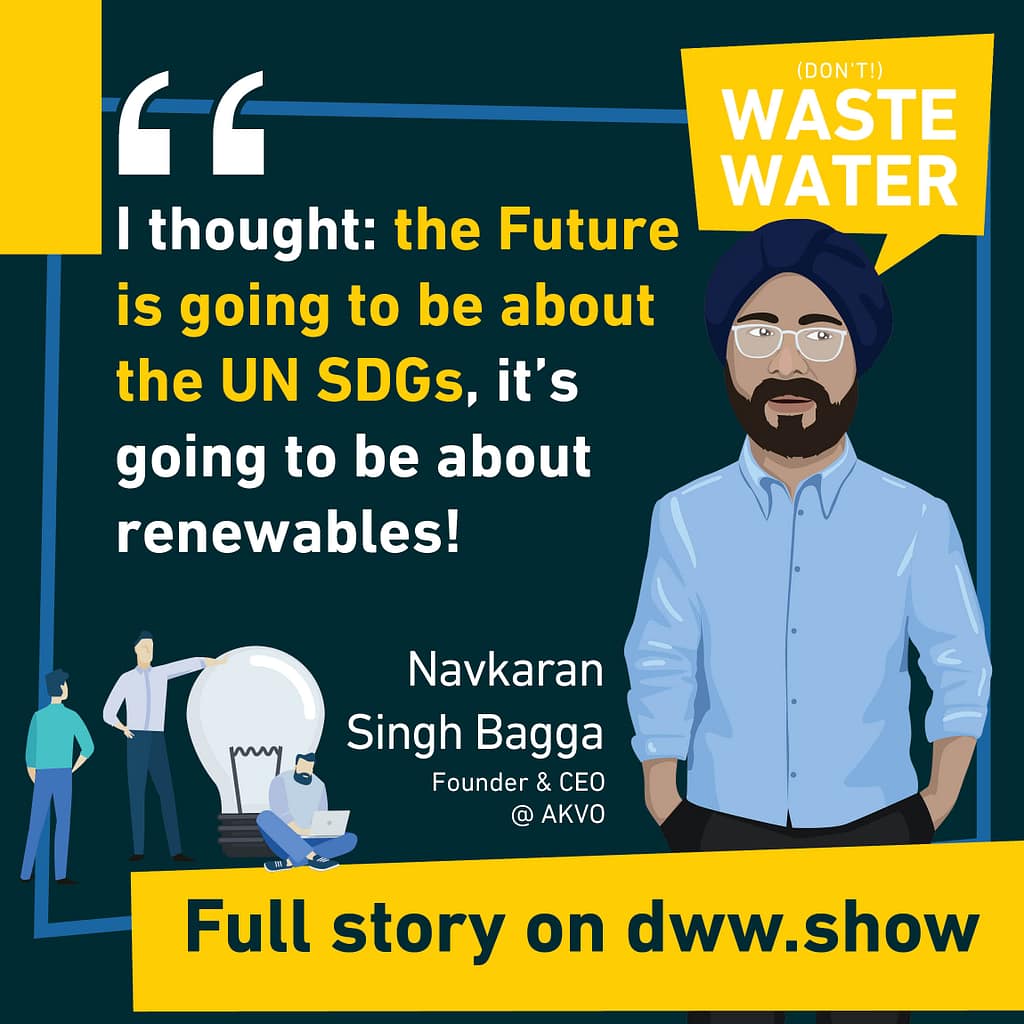
Here in Kolkata ran that for about four years. It was really capital intensive, decided to find a strategic partner and gave away controlling stake. Once I gave him a controlling stake, I basically became redundant because I used to run the plant. And then I was born again. When I was bored again, I started to look at else I could be doing. And you know, this is around mid 2016 and I thought the future is going to be SDG (UN Sustainable Development Goals). It’s about going to be renewables. It’s going to be about how can you be sustainable? And I was looking at toying with it all kind of renewable power, looking at energy, and then water really interested in it’s a lot of research on water and this information I’m going to give you next is probably on just one more podcast. And this information is kind of the secret is that while I was doing a lot of research of water. Haveyou seen the movie the big short?
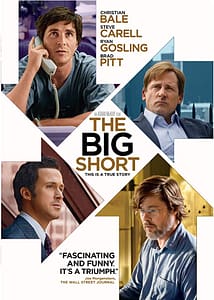
The inspiration to enter the field of Water from Air all started with a movie!
Antoine Walter:
No!
Navkaran Singh Bagga:
OK, you shall read the book and watch that movie. So There’s a movie called the big short, right? And it starting a Christian Bale and it’s about the mortgage crisis in the U S and how there was a group of people that were hedging against it. While everybody said it wouldn’t crash. These people, the people who bet against you and I was really influenced by others going and Christian Bale’s character. Who’s a genius of basically saw this happening at the end of the movie says that now all his investments are in water. So I kind of took from that and said, maybe I’m going down the right path. This is where water’s going to be. And, you know, four years later for the first time in December, 2020, that California future water futures are traded. So water is fast becoming a commodity. And to be very honest, I can talk about sustainability and the green, but I am a businessman. So I looked at the business opportunity and start running behind it.
Water is a fertile ground for successful investment
Antoine Walter:
It’s very interesting because you’re bridging many topics we’ve been addressing on that microphone before we were discussing Water Futures with Nicola Lei Ravello. And we were discussing how all of that is creating a new environment and also the elements that sustainable development ease apart of environment, for sure as a part of humans, for sure, but needs to be cash positive and to bring value. And that’s something that we discussed for instance, with Gaetane Suzenet. So interesting topics that you bridge I’d love your take as well to say that entrepreneurship is something you need to fight boredom. I mean, that’s not everyday that you hear that. So very interesting matter, but within your dive into water, actually, you could have taken any kind of water opportunity, but what you were looking at is something quite unique. Can you tell us which kind of water you are looking at with Akvo?
Navkaran Singh Bagga:
We look at the statistics, right? So the world in general, can’t complain about a lack of water because we literally have a water body, or a water source close by. So we kind of sit around and say, oh my God, we’re going to run out of water and say, it’s a finite earth with all every single natural resource is renewable, right? So if you have water, the water cycle, it’s a whole rotational cycle. The challenge that comes in is that how accessible is potable water. And that is where the real challenge is. People aren’t facing crisis to bed or meeting hygiene. The crisis that they face is with potable water, whether it is the lack of potable water or the lack of good quality potable water. So whatever you consume really needs to be at a certain level. And I thought that the easiest way to go after would be the drinking water segment. With Akvo, the idea was that when you looked at the technology basic core technology, it’s a decentralized system and the always talks. And my core belief is atmosphere water generator to water is what solar power is to power, right? You can always go modular. You can go decentralized. You don’t need to be feeding a grid. You don’t need to be feeding a central source. And I found that interesting to kind of create something with just power. And that’s why I completely went after it.
Water from Air: The sources of Atmospheric Water Generation
Antoine Walter:
So you’re jumping ahead in the topic. Atmospheric actually let’s define that one. You know, I have to say, I didn’t know there was that much water in the air. So I discovered that when researching for that episode, and I found that on your website that there’s 37.5 trillion gallons of fresh water in the air. If I translate that for European units, that makes 140 trillion liters of water, which makes 140 cubic kilometers of water. And if I take a European example, you have the Geneva Lake, which somehow in the middle of Europa and the Geneva lake has 89 cubic kilometers of water in it. So it’s 1.5 Geneva Lake, which is just out there in the air somehow. But it was wondering reading that figure. What are we talking about here? Is it the clouds you see out there? Is it just humidity in the room? Is it a combination of those? What exactly is this water, which is out there in the air?
Navkaran Singh Bagga:
The calculation is entirely based on how much water vapor is present in the air in totality, whether it’s about the clouds, whether it’s about the humidity in your room or the humidity and ambient air. So a collective figure. I don’t I’m not sure if you could pinpoint it, you know, down to the figures, because we also got these figures off of the internet when we were doing our research with the kind of source that we have, because it’s very difficult to measure. But the whole idea there is to kind of cumulatively tabulate, that this is the kind of water that’s always present in the environment. That’s the way it look at it. And it is literally an unlimited source of water.
Antoine Walter:
That is an interesting take. You, you have as well it’s to say, if you’re taking something in groundwater, I mean, it’s a reservoir. You take it, it might be replenished in some way, but still you’re taking, it’s not all going there. Whereas the water cycle is always turning. So there’s always going to be this amount of water. And it’s a matter of scale that we see how much there is not it’s about is it’s when treated more or less, doesn’t change the figure. So this infinite source of water, you you’re tapping into that, but how did you came to the idea of saying, Hey, that’s what I’m going after. So
Navkaran Singh Bagga:
I was doing a lot of research on what kind of water businesses I can get into. And when I looked into kind of, you know, looking at wastewater recycling, or was it desalination? So I saw that while they are technology, they’re kind of standard mechanical tech, which required a lot of infrastructure. So let’s give an example of desalination, right? Desalination is probably the answer to the water problem in the middle east temporarily, because you look at the desert and I’m sure if you’ve been to Dubai or any other middle Eastern city, you will see that they have micro-irrigation on the planters next to the foot pots on the pathways. And that’s insane because you’ll say this was a desert. So I don’t think the issue is with water in general, right? The whole idea is that the idea of making this particular technology accessible requires a certain amount of huge infrastructure spending, whether it’s through large corporations or through government, the idea with atmospheric water is that it’s a decentralized system. It doesn’t require transmission, which means you can literally put the water in people’s hands. You can buy a machine, plug it into the wall and have water generating from the minute goal. So that kind of power is infinite.
Producing Water from Air: how did it start for Akvo?
Antoine Walter:
That’s the part I understand. The part I don’t understand, you know, is personally when I’m sitting in a room, the first thing I’m thinking is not, oh, there’s a lot of water here. Let me capture that. So I, I imagine you sitting maybe on your couch and with the air conditioner next to you and seeing that water dropping from the air conditioner and thinking, Hey, there’s something to do there, you know, a bit like Archimedis going out of this bath and saying, Erica, I have something
Navkaran Singh Bagga:
Very candidly as dramatic as I would like to make it sound. You know, there’ve been people in the space before me, there will be people in this space after me. I just tried to make a better mouse trap. The whole idea was to kind of look at existing tech and see how we can indigenize it. Can we make this in India? Can we better the technologies that exist? Can we make it more efficient? And that’s what we started set out to do. So we understood that the technology is quite simplistic, to be honest, right? It’s what? A de-humidification through refrigeration. You take an ambient air. Anybody who studied physics or even basic common sense will know the concept of dew point. It’s a hot day or a glass of water out. You immediately see a, you know, condensate on the outside of the glass.
Navkaran Singh Bagga:
And the idea is that while that works at that scale, can you replicate that process consistently to kind of generate certain copious amounts of water, you know, in larger quantities . Being the entrepreneur that I am, one of my core strengths has been to kind of get good teams together. So, you know, I immediately started looking for people in the refrigeration space, in the electrical space to try and see if we can build a machine of our own. And it, took us a whole year to kind of, you know, build the first machine up. And we saw this actually does work. And while doing our studies and doing our designs, we ended up with the most power efficient DWG in the world. So our machines consume the least amount of power per liter, which makes us kind of unique. But like I said, but I wasn’t interviewed before about two, three years ago on what the news channels.
Navkaran Singh Bagga:
And the question that I was asked is, are you proprietary? Are you going to protect this? And my idea was the more players we can invite to come into the space. The more we can get the movement going. So I would kind of look at getting more people into the space and better the tech. So it came become conventional thing. Water is a space which is unlimited in pure market perspective. So they cannot ever be too many players. And that’s how this came to me. Like I said, I was looking at various technologies and this happened to be one of them, which really got my attention. And the whole idea of having single units, not requiring infrastructure is what really caught my attention.
Competition is a good sign for your business idea!
Antoine Walter:
Very interesting. What you say about competition, because usually it’s the, the counter intuitive thing of entrepreneurship is that if you’re alone on the market, it’s bad news because whether you have a bad idea and that’s the reason why you’re alone or the market is not ready yet to adopt it. And which means you don’t have competitors or colleagues to help you push into that direction. And actually your technology is in this kind of spot because you are creating water from a new source. So it’s not like another treatment technology that would be then connected to a network. It’s really something, something different let’s discuss, which problem you solve. What is the typical application of your new source of drinking water in which place to which community, how do I have to imagine that part?
Navkaran Singh Bagga:
The lowest hanging Fruit currently for our tech is like I said, portable water because drinking water is something that you can still attribute the cost and people already have a cost attached to it, whether it’s from a personal perspective or an enterprise perspective. One of the biggest case studies we have is an installation. You’re in the refinery in Kolkata categorical, which is a government that defined refinery called the union or a corporation. And, you know, they have a 300 acre refinery and they had a lot of drinking water issues. So they had two, three options ahead of them, right? They could either go down to the groundwater route and individual drinking water points where they have to constantly keep filtering the water. Again, problem is industrial area, a lot of arsenic in the groundwater there. So those technologies really cost a lot of money. Secondly, you could continuously keep buying water, which again is a cost.
Navkaran Singh Bagga:
They decided to go with our technology because they have six water points individually, which are completely transmission free. They just installed it. Plugged the power on, and suddenly 900 people drink water from our machines every day in the refinery. Similarly, we have case studies in the UAE, in Qatar, in India. The biggest market we have is in south India and Chennai because that’s where people are used to paying for water in the Metro cities. So currently the low-hanging fruit for us is drinking water. You know, I can’t really go in and say, you know what? People may irrigate their lands with my water. No, would be really expensive, but from a drinking water perspective, we’re getting there, we’re getting it a place where our cost is acceptable.
Capturing water from air: a new water source
Antoine Walter:
So basically when people are off grid or when acquiring water would be very expensive or simply when there there’s no water. So you need to find a new source.
Navkaran Singh Bagga:
I’ll explain you one more challenge, which probably you have not seen because you live in the Western world. And, you know, I did my undergrad in the, you can even drink that water, right? And so the idea is that you don’t have these issues in India, you have these kinds of issues, right? So we started the issue of non-availability water. India is becoming a huge market for water purifiers. So even if I have a water purifier and the building complex, I live in needs to cart in two tankers of water a day, which means there are times when our water purifiers aren’t working such as I’ll have drinking water with the solutions to that. So I don’t have dependence on water source. The second part is, let’s say you have a water source, but the water source is contaminated or impure, or very you know, has high TDS, or it can’t be purified as well as normal water would be.
Navkaran Singh Bagga:
So then the consumer cost of filtering that water goes up quite high. The technology we’re making is mostly currently suited for urban areas because we are heavily power dependent. So I can’t really keep talking about off grid because we really can’t be off grid. Unless you have your, you have a solar plant or a wind plot, you know, wind turbines going on, where you get more. So we’re an on-grid Solution to provide you portable water. So whether it’s an apartment complex in Chennai or Anheuser Bob, or in Bangalore or Dubai or Qatar, that’s where we’re going. In some projects we’re working on the Philippines. For example, there, we’re talking about getting machines to schools in remote areas. So that’s probably where they’re coming to kind of not having to cart that kind of water, but we are grid dependent. So we can’t really completely talk about being in off-grid areas.
The optimal conditions of Atmospheric Water Generation
Antoine Walter:
And what are the ideal ambient conditions for your technology?
Navkaran Singh Bagga:
As any renewable tech, You know, we come with the limitations because we are tapping into a source, which we can’t control. You know, just like solar power. You cannot install solar panels in in Norway or in Scandinavian countries, right? Because you really don’t get a lot of sunlight. So similarly we need hot climate with high humidity. So tropical environments are the most suited for Atmospheric technologies.
Antoine Walter:
We’ll see, you mentioned competition before. What’s interesting is that your competition has, has many shapes because actually you’re competing with water that you put in a truck and you bring somewhere, you’re competing with bottled water and you’re competing with all the technologies, which will get atmospheric air, but not necessarily the same than yours. Is it a green field and you can go with whatever you like? Or do you think at some point there’s going to be one winner and hopefully it’s you, because if it’s not you, I mean, do you know the competition from blue reference don’t exist anymore? When DVD was replaced, it was blue Ray and the all the 20 ones just died out.
Navkaran Singh Bagga:
I don’t think that’s the future. The future is a combination of different techs which can come together. So whether it’s a combination of, let’s say wastewater, regeneration it’s combination, rainwater, harvesting it’s combination of air to water. The idea is to kind of pour in as many renewable sources as possible and come together to collect a solution. Right? I personally believe that in the developing world, not so much in the developed world, the idea is to kind of make the urban area sustainable first because that’s where the highest level consumption is. What happens in a place let’s say in India is because of the large tax-paying population lives in cities. The pressure on cities to kind of ramp up open development is at its highest. And for that reason, the rural areas get neglected because it’s a trickle down effect. So the idea for me and the world I see is as more and more urban areas become sustainable, then the real focus of governments will be the kind of provide infrastructure to the rural area. So the solution I bring in or AKVO brings in is to bridge those gaps. It’s not to replace though. Like I said, the whole revolution of the power industry, we went from Tomal to solar wind and so on and so forth just because solar power is there doesn’t mean that the tower plants are shut down. It just means that the new plants that are coming up are being invested in, in that space. Similarly, we heard of augment supply. We can never be a complete supply. It’s just not possible.
Download my Latest Book - for Free!
Inspiration from the Energy Sector and Competitor in Atmospheric Water Generation
Antoine Walter:
It’s a very interesting analogy you make with the energy sector. So that makes it much clearer. Thanks for that one. I have to bring one of your competitors are on the table because it was mentioned on that podcast. A couple of times they used to be called zero mass water. Now they’re called source global from an external point of view. The main difference between what they do and what you do is that they target more of the off-grid with the solar element. And you, as you explained, you’re more on grid, but I was really surprised last year, when I looked into the topic to see how much almost hate they were getting. And When I was watching your own Ted talk, I saw a couple of comments on YouTube, and it was just wondering, I mean, people are saying you, Hey, come on, you’re explaining the basis of the water cycle.
Antoine Walter:
And I was like, yeah, sure. He, he does that because it’s about this. And if people knew about that, then we wouldn’t have to do everything we have to do today in the water industry, because they would be knowing what the challenges are and what the solutions are. And the other was, come on, it’s a lie. It’s not working. That thing is just not working. And it just shows you how difficult it is to, to come with, with something new in that area, with something people haven’t been touching and experiencing for 30 years. And I was wondering, how do you react to this kind of skeptics or almost haters?
Dealing with “Haters”
Navkaran Singh Bagga:
I made it my single mission to educate them, moderate, whatever answer. The first thing I did when I started this winch up to be honest, was I, while I was investing in tech, I didn’t invest heavily in marketing, but there’s one thing I invested in. And that was a PR forum because I needed more and more people to talk about this more and more people don’t know that such a tech exists, the conversions will happen. The market will build out on its own. But you know, when I first started out, I out of a hundred, people are talked to at least 90 said. “What?! Can you do that? Can you make water from air?” I wasn’t the first player in the market. You have to understand the seven people before me, which means the lack of education around the stacking concept was prevalent.
Navkaran Singh Bagga:
My single focus has been to kind of break that myth. Number one, number two, as far as we get hate, and we talk about competition and now what other people are doing. Yes. I think people will get hate for the reasons of how they address the problem of what is their business model behind it. The, you know, source is a phenomenal thing. I think it’s very smart tech. However, it comes with the stamp challenges, right? So the problem is that they’re trying to solve a rural problem at an urban cost. That’s where I see the disconnect, right? So that’s why I’ve been very forthcoming in telling you that, look, I’m here to talk in urban areas. I’m going to be on grid. I can really am not the answer to the water problem, but when we’re getting there, so we have to have cost break from it.
Navkaran Singh Bagga:
Yes, the tech is expensive, but the idea is to get it to accessible, as accessible as possible. We generate water at say, give or take 2 Rps a liter, which is say about three US cents, maybe two and a half, three us cents, right? Which is not expensive. It is far lower than what people would do. Even at a capital expenditure cost. We’re trying to keep it as low as possible. So more and more people get access to the spec. In fact, the future I see is where people don’t have to invest in our equipment. They can just use it for water as we generate it, and then kind of pay us for the water.
The costs of Water from Air
Antoine Walter:
What is the typical cost for one liter of bottled water in India say about 30 cents. My Western view would be to say $1 or one Euro, but see, even at 30 cents, it means you are producing 10 times cheaper than bottled water. It’s important to put things in perspective. I was also looking at articles who were calculating how much it would cost to take a truck of water and to truck it somewhere. And the cost is roughly 12 cents per liter. So again, four times more expensive and your technology?
Navkaran Singh Bagga:
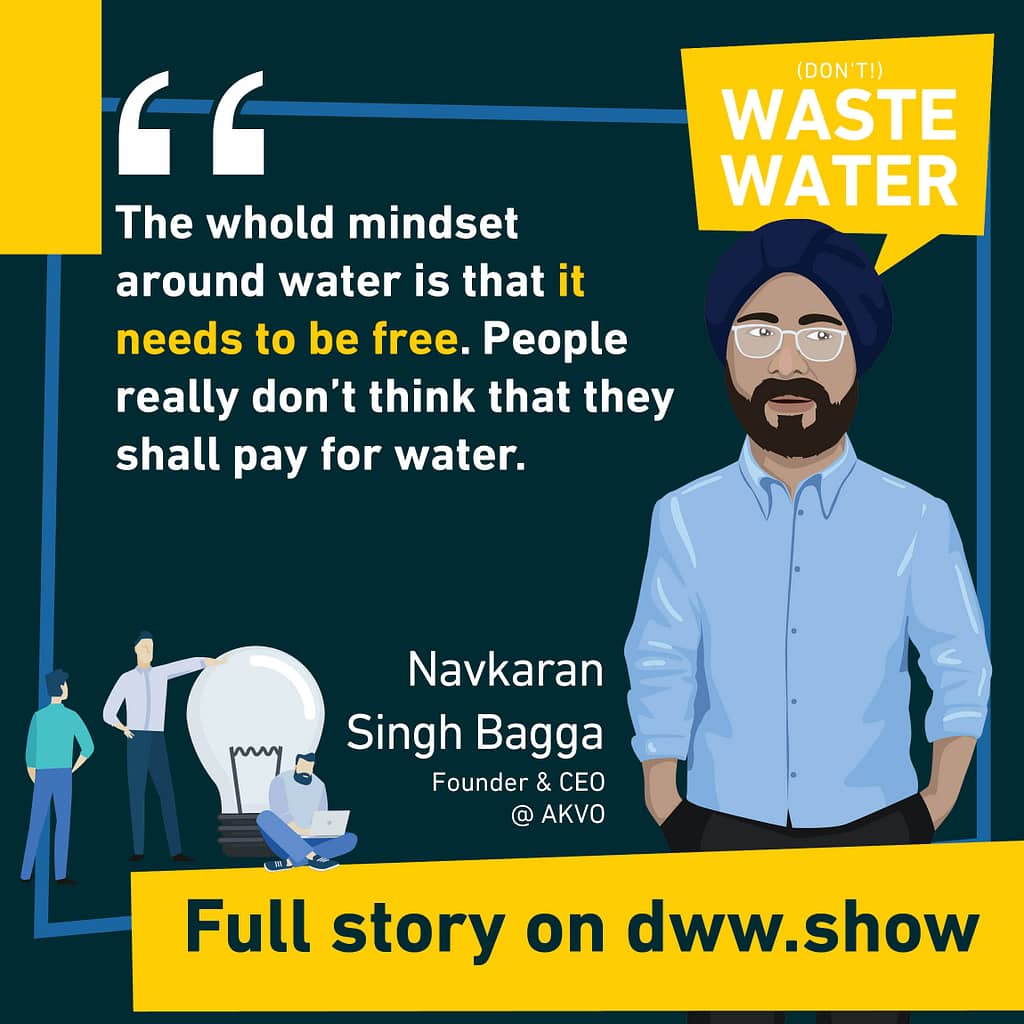
No, in India, the cost of tankers is very cheap. A 3000 liter tanker should cost you something like $40 between 40 to $60. So a water is literally cents on the dollar in Indian domes. So from that perspective, they’re very expensive. That’s why we’re not going after traditional water sources. What we’re doing is going after the bottled water or, you know, the five gallon jars, the 20 liter jars, that is something that people are used to spending, you know, between four to five rupees a liter. And that’s where we start making commercial sense for them because we’re half of that. So the whole concept in India, in the markets such in India is challenging because the whole mindset around water is that it needs to be free. People really don’t think that they pay for water. And that’s where it, it kind of becomes challenging.
Navkaran Singh Bagga:
Number one, number two, when we go and pitch into a customer we say, you know what? We have a system to drainage water from it. And they started immediately drawing parallels between us and water purifiers. And we tell them, look, we’re not a certification system with a generation system. We’re literally making water from air. It’s not like you have to feed in a water source. So like I said, the biggest challenge, the air water industry faces, whether it’s a source, whether it’s us, whether it’s, you know, these Israeli water gentleman, it’s about mass education. It’s about telling people that look, this can happen and drawing parallels and making them understand. So customer education is probably the biggest challenge our industry faces.
Radical Transparency as a sign of credibility
Antoine Walter:
I have to say, I love your take because you’re, you’re really saying, here’s why it’s good. Here’s why it’s not good. So really like if you’re, if you’re there and it’s not suited for you, if you’re there, it’s suited for you. I mean, I hate it when you, when there’s a solution, which is too good to be true. Your solution seems to be very realistic. And so really thank you for this honesty and transparency, I really appreciate that. You mentioned something about people wanting water to be free. I have to share you an experience it’s almost 10 years ago. Now it wasn’t a UN water problem in a new Delhi. So it was water for all. And they were bringing water into the slums of Delhi. And I was really impressed. That’s something that really stayed with me about what I heard from those people, telling that they wanted to pay for the torture, of course, a fraction of the cost, because they didn’t have more money to, to give, but they wanted to pay for it. Just to say, look, before here, we had children dying of the problems, linked to bad quality of water. Now you bring quality water that has a value. So it has to have this cost for value. Is it really such problematic that the majority of people still think water shall be free?
Navkaran Singh Bagga:
Water is a sensitive topic? The water is a sensitive topic for the simple reason that whereas somebody wants to pay for it is simply flowing everywhere. So, you know, people don’t really understand the concept of that in particular, the problem with the water industry in general, in the developing world is a bit that people aren’t used to water bills, right? Uh, till about 20 years ago, anybody in India in any city can just might as well dig a board well and kind of get your own water and water source. It’s that concept the difference. Like I said, I keep drawing parallels to the energy industry because that’s what makes more sense to me is that, you know, cause the type solar came in or wind came in, people were used to paying a point unit price power. So it was easy to make that transition.
The hidden cost of Water
Navkaran Singh Bagga:
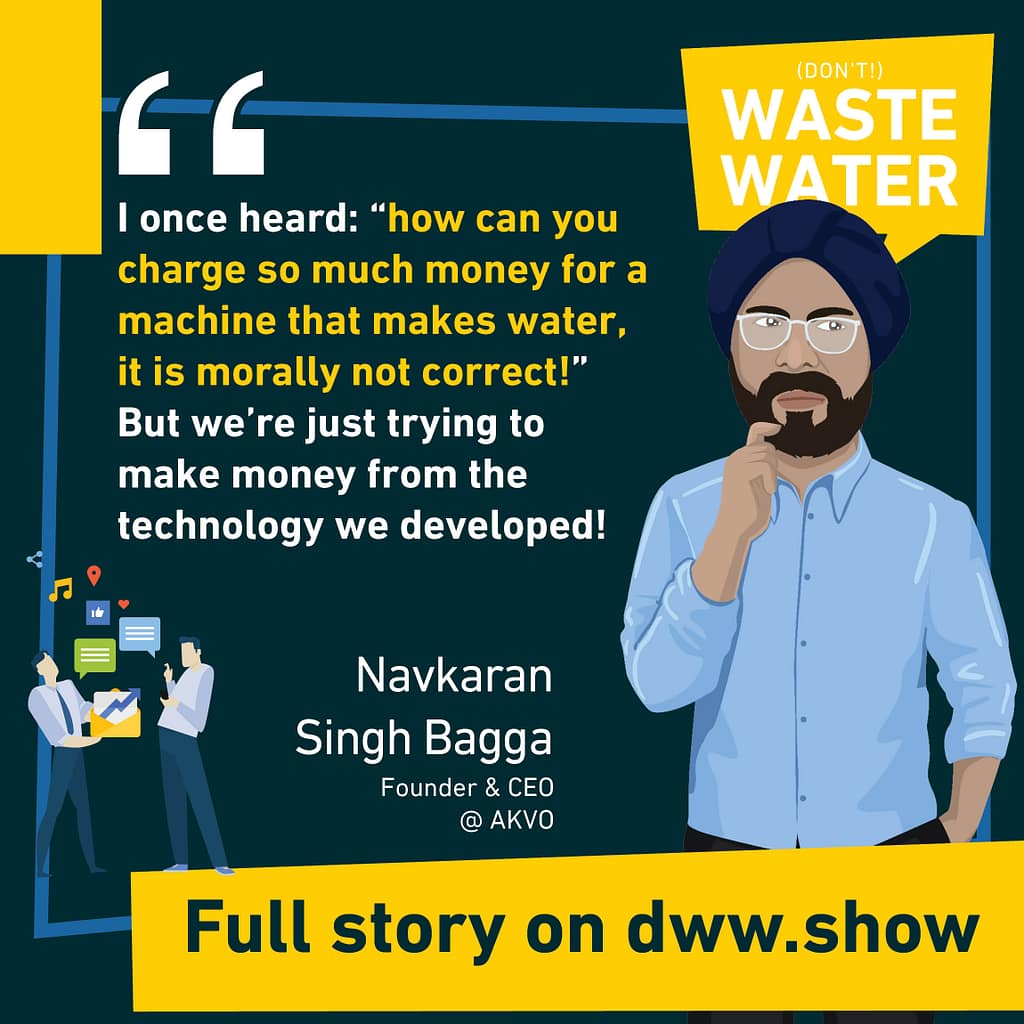
The challenge today is how do you take something that is free and start saying, you have to pay for the stuff that seems like a huge binge to people. And you know, we’ve had calls. It’s very funny. We keep getting the sales call, the, my sales that took a call from someone in Western India. And she said, so I would like a house, a home machine. So we said, we have a whole machine that has the smallest machine widows, 50 liters per day. And it’s price of one 99,000 rupees, which is roughly about say 1400, 1500 us dollars, which is high. But again, people in India have iPhones that cost more than that. So you, we don’t even look at that talent. The statement that she made broke me down at the same time made me look at this is going to be much tougher job than I thing, which was, she said, how can you charge so much money for a machine that makes water?
Navkaran Singh Bagga:
This is morally not correct. Right. And I got taken back by the statement because we’re being pitched as someone who’s trying to make money off of water, where we’re trying to make money off the technology we developed, right? We’re not here to sell you water. We’re trying to change the way things are done? So the whole question of morality, the question of ethics, I don’t take out ever attached to any other commodity in the world, which are, uh, you know, associated to water. You brought only on the problem, the commodity that probably be addressed to, or attached to the same thing as air, right? So these are the two things that are sacrosanct. They should be for all. And that’s the challenge.
The “moral challenges” of the Water Sector
Antoine Walter:
It’s a surprising comment because, you know, I doubt people really question the morality of bottled water companies. In some cases they do when it’s extreme. But most of the time, you know, it’s just something it’s another good you have in the supermarket and who cares if it’s moral to charge for, because it’s clear you, you pay for what you pay for the transportation of water. You pay for the bottle itself and you consider maybe the water is free, but then it’s really expensive transportation. So yeah, you’re basically marketing the technology, not the water itself. The water is the result. Talking of business. You mentioned you’re a businessman. I saw that you’re bootstrapped. And I was thinking, you know, you have a way to, to present your, your business, which is very clear. It’s not like we can solve every problem. You have a targeted problem, which is usually what investors are looking at. They don’t look at solutions which are like you know, just selling hot air, but something which is targeted. You are on a market where there’s billions of people let’s, let’s make a generality, billions of people lacking access to drinking water. So almost infinite market, almost infinite water resource because you’re tapping into a reservoir which is self filling itself. And you have kind of a clear strategy. How can you be bootstrapped? I mean, do you receive calls from investors twice a week and you decline?
Navkaran Singh Bagga:
Yes and no. So I do receive quite a bit of investor interest. Unfortunately I’ve actually walked away from Trina one step now because of the clear directive of not looking at how this market has to be played out, that the problem with, like you said, it with me is that I’m quite a candid person. I, I call it what it is. And because I keep telling investors that this is a patient skill, right? It’s about equipment setting. It’s about if fly by a portion of the business model, because as a company, we have to evolve as a product, we have to constantly keep evolving and keep trying different hands in different business models. Being bootstrapped. It gives me that freedom. I’m not saying no to investment. And all I’m saying is I think I may be better suited for external investment when I myself have clarity on what the market really is. Currently to be very honest, it’s like a toy I’m playing around with every day, every day, I discover something new about it every day. I want to add a new part or new feature to the product or to the service. And that’s precisely why we’ve tried to keep it as bootstrap as possible and see how it goes!
Water from Air as a B2C solution
Antoine Walter:
To use the, the, the buzz words. I saw that you were entering the B2C market with your, your pod. So basically you’re also going into the homes of people and saying, it’s not only something for communities or for industries. It can also be inside your home. What is your, your, your, your target there
Navkaran Singh Bagga:
Antoine, the Idea is that we have to kind of first get as many adopters as possible, right? So why would the last year we’ve been trying to sell the machines? We’re trying to walk away from that over the next two, three years, because there is a hindrance, there’s a higher cost of capital for people. And people really are not prepared to spend that kind of money yet. So while we are concentrating on the pod, the idea is to go more mass outreach, kind of like take over communities. Apartment complex is a provide a de-centralized drinking water system. So that’s something which we’re looking at. We have received a lot of infrastructure for our board because we’ve added a new twist to the product that your USP is being aware. The only add water machine there for the homes that is kind of a split system where the water generators are of the house.
Navkaran Singh Bagga:
And you have a dispenser inside the kitchen. All our machines are IOT enabled. You get real time data on what’s the humidity, what’s the temperature, what does power to the water meter yesterday and things like that. So we’re giving a lot of lab because customer, and that is something that I actively spend time on because the first challenges I faced was how do I know this works? It made X amount of water yesterday. How do I know that it didn’t make water because the temperature was high or low. So I really tried to build out the tech side of it. So all the last two years, I can take him in spite that all our machines are digital. We don’t have any analog machines. They’re entirely software driven. That’s how we’re evolving as a company. So B2C interest is there, but it’s not like people will be queuing outside the store anytime soon, the kind of book slot. So we like to see how it goes!
Path to Growth for Akvo as an Atmospheric Water Generation Company
Antoine Walter:
Coming back to your growth, even if you you’re bootstrapped. And I’m impressed with that fact, I understand what you’re saying gives you more agility, more freedom to explore the market. I don’t know if that figure is still accurate, but you’re 25 inside AKVO. Is that still the case?
Navkaran Singh Bagga:
Yes!
Antoine Walter:
What is your, your vision of the future of your company? Where are you in five years? I’ve seen that you’ve tripled over the past three years. So in the next five years, you intend to do times five or no, I think this
Navkaran Singh Bagga:
Is going to be pivoting year for us. So I hope that we can teach triple a growth within this financial year and with the change in the business model and now kind of going into over gear more because I’m going to be very aggressive with reaching out to consumers. The idea of the longterm is whether it comes in equipment sale, or whether it comes in water as a service AKVO in the next five years should be at least fulfilling needs of up to at least 10 million liters of water on a daily basis. That is the focus. So I want that at least across the world, wherever we are, we’re generating at least 10 million liters of water on a daily basis. And that’s what we’re going for.
Offering Water from Air as a Service
Antoine Walter:
You just mentioned water as a service. When you, you gave your figure early on of the two rupee per liter, how do you calculate that? It’s the investment costs over an amortizing time, I guess, of 15 years or something like that. And then you, you get this figure?
Navkaran Singh Bagga:
No, our figure is entirely based on the running cost, the power we consume. So in India, on average, the residential power cost is roughly something like eight rupees, a unit of power kilowatt hour, and our machines in its most ideal conditions generate four liters of water for every unit of power. So that’s how we are able to do a piece for you. Well, regarding
Download my Latest Book - for Free!
Antoine Walter:
That, the service part, is it something you’re touching today or are you pure supplier of hardware?
Navkaran Singh Bagga:
We were a pure supplier of hardware until the last year where a couple of doing a couple of pilots now, which will completely shift gears to a service-based model. And if it wasn’t for the lockdowns, I’d have a couple of projects up and running by now, but hopefully this coming next quarter, maybe July onwards, we should actively add a couple of more consumers or at least a couple of hundred consumers in India to kind of look at what is this office.
Atmospheric Water Generation in industrial sites (B2B)
Antoine Walter:
I guess there’s a huge market in the, in the industry side of the business, because you have there, these water fountains, which are a service, basically, I, I don’t, I don’t think that industry is actively pay for the fountains. They pay for the fact that there’s always water available. So that could be your water as a service model, but just out of the blue with them. But it’s the first thing I would be seeing for, for you is it’s where you intend to go on the long run?
Navkaran Singh Bagga:
Yeah, the Idea is to kind of move water service to consumer. So like I said, where we’re a drinking water source, right? And wherever there are people there’s always going to be a need for drinking water. It will come with various modes. It could come for residential complexes. It would come for large factories where people have employees with an indicator for water. It could be public places where people can maybe work in, you know, water vending machines. The idea is to give people access to water wherever possible. So like I kind of the, the cost of repeating myself, we are drinking water source, right? Whenever there is a need, our source can fulfill that need. It’s just a question of adaptability and how we as a company are willing to kind of be agile and versatile to meet that need. And that’s what we’re going for
Towards internationalization
Antoine Walter:
Ou mentioned your targets to triple your revenue in the next year. Do you achieve that solely in India or do you have also plans for international expansion?
Navkaran Singh Bagga:
Actually we have machines running in seven countries today. As far as south America, I have a machine, the chili, a couple of machines in the middle east, of course, because that seems to be the lowest hanging fruit. I have machines in. Africa, I have machine in Philippines and India as well. So the idea is to kind of be a global player in the space because wherever we get permitted to be a water source, we like to go in and you know, we’re trying to build up our technology in a manner now where we’re kind of build it up to be modular, to be scalable last year, year and a half, we’ve kind of changed our entire focus on what are we going to be when I first started out, you know, it was the idea that I build a product it’ll make X amount of liters every day and I’d be able to sell it as a price like this machine that makes 50, because this is one that makes a hundred, it’s also Ford. And you’ll see my website stand small things like that, too. But with the new focus of how they’re going with changing our entire focus and being a product based company to a service based company, like I said, so we’re trying to build our backend products that allow us to be scalable to provide that service. So whether you require say 500 liters or 50,000 liters, we should have equipment that can scale up fast, be modular in nature and provide that supply. And that’s what we’re working on right now.
Antoine Walter:
It sounds like a fascinating path and a fascinating plan. Well, I think you delivered on the promise, which I had on the beginning, which was that I really wanted to dive a bit deeper in that a new way to produce drinking water. Navkaran, if it’s fine for you. I propose you to switch to the rapid fire questions.
Download my Latest Book - for Free!
Rapid fire questions.
Antoine Walter:
So in that last section, I’ll try to keep the questions short. If you can keep the answers short, it’s cool as well, but you, you, you’re going to notice that I’m always the one that sidetracks people, so don’t worry that’s going to happen. My first question is what is the most exciting project you’ve been working on and why?
Navkaran Singh Bagga:
The most exciting Project has been AKVO for all of my life now. And every day is a new challenge because every day I think of something new to add to it. So I think it’s currently fulfilling to my entire need to not be bored because there is not a single boring day while working on that
Antoine Walter:
Book. If there’s something new every day, what was your latest, crazy ID? This really
Navkaran Singh Bagga:
Crazy idea was to go for a complete distributed, prepaid water distribution system for buildings where people can put in money on an online platform and their wishes will generate X amount of water up to the model money that they have in abundance. And that’s what we’re
Download my Latest Book - for Free!
Antoine Walter:
Working on right now. So it’s cool. Crazy, but cool. It’s crazy. What’s your favorite part of your current job? The lack of boredom. There’s a pattern. I noticed
Navkaran Singh Bagga:
That that is the button. That is the core pattern. What
Antoine Walter:
Is the trend to watch out in the water industry now in general? I think
Navkaran Singh Bagga:
The trend of watch out in general is how new versions of old equipment are going to come up and how they’re going to change. Focus on being customer friendly, looking at how people consume water and another trend that’s also going on when we’re looking at alternative water sources. The next big thing to watch out of which I personally believe is to look at water consumption. And that’s what you see. A lot of companies are now getting funded in the water metering space, because that is the next part. It’s not just supply side. It’s also the mindset. And when these two come together, that’s, what’s going to be interesting.
Antoine Walter:
I’m surprised that you don’t mention decentralized as a trend because you, you mentioned it in the discussion, how you are addressing that, that wave, but it’s true.
Navkaran Singh Bagga:
Antoine. I I’ll be very honest, right? I’m hurt. I’m providing a solution, but is my solution, the answer to all of the water problems? No, it isn’t. And it can never be. So while I am a big advocate of decentralized water systems, it’s never going to be just the decentralized water system. It’s going to be a combination of all spirits coming together to kind of reduce the water pressure, the world is currently facing.
Download my Latest Book - for Free!
Antoine Walter:
What is the thing you care about the most when you’re working on a new project and what is the one you care? The least the most I
Navkaran Singh Bagga:
Care about is the team. I think as an individual, we can’t achieve anything. It’s when we can bring good people together and give them similar ownership where they believe what they’re working on is as much theirs as it is yours. I think that is something that I liked the most, which I really did better since I’ve been impatient. I think it’s when people can’t see, you know, the same thing that I’m seeing. And if I’m going to convince someone on that, it kind of becomes a disconnect. And that’s something that kind of irritates me a bit.
Antoine Walter:
That’s often the problem. When you think a bit too fast, people have to, to, to catch you as well. I said I was going to be the one side tracking. I’m just coming one step back to your previous answer. You mentioned the booming in metering, which makes me think of what you were mentioning in your Ted talk, that we are eating 3000 something liters of water every day, we just don’t see it. Is it’s one battle. You think to bring that in plain sight, that everybody sees that at the end of the day, how stupid as it sounds, everything is water?
Navkaran Singh Bagga:
Like I said, that’s a problem, right? People never going to look at that aspect of it. The issue is that when we wear everything we do, you know, and everything we’re surrounded by whether it is the steel on that microphone that you have you in that, that processing required amount of water, uh, whether it was the food that you eat. So water is actually something that consumes us, whether it’s for a process, whether it’s for material or whatever it is, the problem is that we’re not getting water conscious in that sense. And I don’t think we ever will to be honest. I don’t think that the meat industry is going to see a revolution because it consumes X amount of water. However, having said that, I will see, we will see more and more processes, uh, becoming more water friendly, a primary example, uh, in that space is hydroponics, right? Uh, hydroponics is something that is water friendly agriculture. So we are going to see these shifts that will change how people see things.
Antoine Walter:
Things. Let’s do questions for you and Afghan. Do you have services to recommend to keep up with the water and wastewater trends?
Navkaran Singh Bagga:
No. I don’t particularly follow any kind of particular source. I keep looking at different topics, different areas until you’re honest. I don’t have that one. Go-To the only go-to I have is that I think skin on Google, but I have a question. I just thanked them. It doesn’t matter where it came from. That’s that’s the kind of information I seek.
Antoine Walter:
Well, Google is a cool source for everyone. So I think that counts. Do you have someone to recommend they should definitely invite on that microphone. I think,
Navkaran Singh Bagga:
Like I said, I was talking about the water heater in space. This company based out of Chennai in India called we got, I’d probably introduce you to them is someone I know. And they’re doing the revenue. She worked in the water matrix.
Download my Latest Book - for Free!
Antoine Walter:
Well, it was a pleasure to have you on, on the microphone. Where can I redirect people? If they want to follow up with what you’re doing with your company, with yourself, what’s the best place.
Navkaran Singh Bagga:
Linkedin is somewhere. We are trying to put in a regular post, but my post off later become less water-related and more personal related. But you can obviously go to the actual LinkedIn page or visit us on atmosphere.com, which is our
Antoine Walter:
Website. Like always the links to everything you just mentioned are in the, in the food notes of that episode. If you’re listening to that and I’ve gone, it’s been a pleasure. I hope I’ll have the chance to chat with you in the future when you reach your times three targets of next year and then the sky’s the limit. No, thank
Navkaran Singh Bagga:
You, Anton. It’s been a pleasure for me to be, I really like talking about this and I’m more of a Mike hog, right? So if I got a chance to talk, I don’t shut up. And I always liked that job.
Other Episodes: